
Dismissing constant worry as just part of getting older is one of the most common mistakes families make. Anxiety disorders in seniors are genuinely under-recognized, often mistaken for personality or normal aging rather than something treatable in its own right.
Quick Summary: Anxiety Disorders in Seniors
Vital Health Care supports seniors managing anxiety with consistent structure, connection, and daily care that genuinely eases symptoms. Reach out to our team here to talk through what your family needs.
What Counts as an Anxiety Disorder in Seniors, Not Just Normal Worry
Generalized Anxiety Disorder
Persistent, excessive worry that’s hard to control and interferes with daily life, even when there’s no clear immediate cause, is the hallmark of generalized anxiety disorder rather than ordinary concern.
Late-Onset and Health-Related Anxiety
Some seniors develop anxiety for the first time later in life, often centered specifically around health, falling, or losing independence rather than the broader worry seen in younger adults.
What Causes Anxiety Disorders in Seniors
Medical Conditions and Medication Side Effects
Thyroid problems, heart conditions, and certain medications can all trigger or worsen anxiety symptoms, which is why ruling out physical causes matters before assuming it’s purely psychological.
Loss, Isolation, and Life Transitions
Losing a spouse, moving out of a longtime home, or watching friends’ health decline all quietly contribute to anxiety, especially when several of these happen close together.
Normal Worry vs. an Anxiety Disorder
Here’s a rough guide for telling the two apart.
| Sign | Normal Worry | Possible Anxiety Disorder |
| Duration | Passes once the concern resolves | Persists regardless of circumstances |
| Impact on daily life | Minimal | Interferes with sleep, appetite, activities |
| Physical symptoms | Occasional | Frequent, tension, racing heart |
| Avoidance behavior | Rare | Increasingly avoids situations or people |
Why This Gets Missed So Often
Symptoms Look Like Something Else
Because anxiety disorders in seniors so often show up as physical complaints or general irritability, they frequently get attributed to other conditions entirely, delaying real treatment for months or years.
Older Generations Rarely Name It Directly
Many seniors grew up without the language or openness to describe anxiety the way younger generations do, describing it instead as nervousness or simply feeling unsettled.
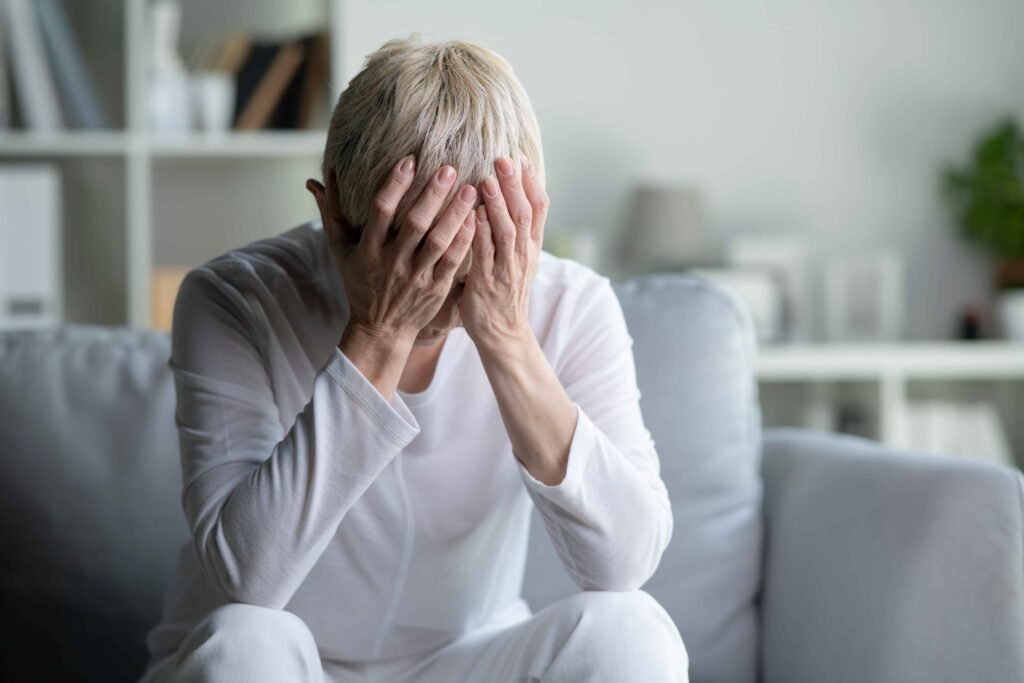
Physical Symptoms That Often Get Missed
Anxiety in seniors frequently shows up as physical complaints- chest tightness, dizziness, stomach issues- rather than the more recognizable worry and rumination seen in younger people, which often delays an accurate diagnosis.
How Professional Support Helps Manage Anxiety
Consistent routines and predictable daily structure genuinely reduce anxiety, giving seniors something steady to rely on rather than facing uncertainty day after day. This kind of structure is one of the more effective, non-medical ways to manage anxiety disorders in seniors long term. The Senior Care Services team builds exactly this kind of dependable structure into daily life.
Reducing Isolation-Driven Anxiety
Loneliness and anxiety feed into each other, and regular, familiar company often eases symptoms more than people expect from something so simple. Isolation is consistently one of the most fixable contributors among the many causes of anxiety disorders in seniors. The Personal Companion Services team provides that steady presence, directly addressing one of the more fixable contributors to anxiety.
Removing Daily Stressors That Trigger Anxiety
Struggling with everyday tasks, cooking, cleaning, and managing medications can quietly feed anxious thoughts about losing independence or falling behind. Addressing these small daily stressors is often overlooked in conversations about anxiety disorders in seniors, despite making a real difference. The Home Care Services team removes some of that daily burden, easing one real source of ongoing stress.
Supporting Families Managing This Too
Watching a parent struggle with anxiety takes a real toll on family caregivers, who often absorb that stress without much support of their own. The Respite Care Services team offers real breaks so caregivers can recover and keep showing up consistently.
Conclusion
Anxiety disorders in seniors respond well to the right combination of medical attention, structure, and connection, even when symptoms have gone unrecognized for years. Learn more about what a Home Healthcare Services full of care options can look like for your family.
FAQ’s
How is normal worry different from anxiety disorders in seniors?
Anxiety persists regardless of circumstances and interferes with daily function, while normal worry passes once the concern resolves.
Can medication cause or worsen anxiety in seniors?
Yes, certain medications and medical conditions can trigger or intensify anxiety symptoms, so a doctor should rule these out first.
Are anxiety disorders in seniors treatable?
Yes, with the right combination of medical treatment, routine, and support, symptoms often improve significantly.
Is it normal to develop anxiety for the first time later in life?
Yes, late-onset anxiety is fairly common and often centers around health or independence concerns specifically.
When should a doctor be involved?
If anxiety is persistent, interfering with daily life, or accompanied by physical symptoms, it’s worth discussing with a doctor.
